Lewis & Matthews, P.C. has provided estate planning services to Colorado clients for more than 30 years. Attorney Jennifer Lewis drafts wills, revocable living trusts, financial and medical powers of attorney, and living wills for individuals and families throughout the Denver metro area, Eagle County (including Vail, Avon, and Edwards), and Summit County (including Breckenridge, Frisco, and Dillon).
An estate plan is not primarily about wealth. It’s about who has the legal authority to make decisions for you if you can’t, who raises your children if you’re unable to, and whether your property goes to the people you’ve chosen or to whoever Colorado’s default statutes name instead. Without a plan, those decisions are made for you — by a court, on a timeline you don’t control, using a formula that may not match what you would have chosen.
Schedule a Consultation — (303) 329-3802
What an Estate Plan Actually Controls in Colorado
An estate plan is a set of legal documents that, together, answer four questions: who manages your finances if you’re incapacitated, who makes your medical decisions if you can’t, who raises your minor children if something happens to you, and who receives your property when you die. Each question is governed by a different part of Colorado law, and each has a default answer that applies automatically if you haven’t specified one yourself.
Colorado’s estate planning statutes are collected in Title 15 of the Colorado Revised Statutes — the Colorado Probate Code (Articles 10 through 17), the Colorado Uniform Trust Code (Article 5), and the Colorado Medical Treatment Decision Act (Article 18). If you die without a will, Colorado’s intestate succession statute, C.R.S. § 15-11-101 et seq., decides who inherits — not you. An estate plan replaces those default rules with your own instructions.
The Core Documents in a Colorado Estate Plan
Most Colorado estate plans are built from the same set of documents, though which ones a given client needs depends on their assets, family situation, and goals.
Last Will and Testament. Directs how your property is distributed after death, names an executor to administer your estate, and — for parents of minor children — nominates a guardian. A will is filed with the probate court and goes through probate administration before assets are distributed.
Revocable Living Trust. Holds title to your property while you’re alive and specifies how it’s distributed after death, without going through probate. You typically serve as your own trustee while you’re able to, with a successor trustee named to take over if you become incapacitated or when you die. A trust only avoids probate for assets that have actually been retitled into it — an unfunded trust provides no benefit.
Financial Power of Attorney. Authorizes an agent to manage your finances, property, and legal affairs if you’re unable to. Under the Colorado Uniform Power of Attorney Act, C.R.S. § 15-14-701 et seq., powers of attorney executed in Colorado on or after January 1, 2010 are durable by default — meaning they remain effective if you become incapacitated — unless the document states otherwise.
Medical Power of Attorney and Living Will. A medical power of attorney names an agent to make health care decisions on your behalf. A living will — called a “declaration as to medical or surgical treatment” under Colorado’s Medical Treatment Decision Act, C.R.S. §§ 15-18-101 to 15-18-113 — sets out your preferences for end-of-life care directly, but only takes effect once two physicians certify a terminal condition or persistent vegetative state. If you have neither document, Colorado’s proxy decision-maker statute, C.R.S. §§ 15-18.5-101 to 15-18.5-105, designates who can make medical decisions for you by default — typically a spouse or close family member, in a statutory order you don’t get to choose.
Guardian Nomination for Minor Children. A will can nominate a guardian for your minor children under C.R.S. §§ 15-14-201 to 15-14-210. Without a nomination, a court decides who raises your children, based on a best-interest standard applied to whoever petitions — which may not be the person you would have chosen.
Asset Protection Planning. Trusts, business entities, and titling strategies that shield assets from creditors, lawsuits, or other claims. Asset protection works best when it’s put in place well before a claim arises, which is why it’s typically planned alongside — not after — the rest of the estate plan.
→ Learn more about living trusts
→ Learn more about power of attorney
→ Learn more about living wills
→ Learn more about asset protection
Schedule a Consultation — (303) 329-3802

Choosing the Right Agent, Trustee, and Guardian
Every document in an estate plan depends on the people named in it. An agent under a power of attorney has real authority over your finances or medical care before you die — choose someone you trust completely, and name a successor in case your first choice can’t serve. The same logic applies to a successor trustee and to a guardian for minor children. Plans should be reviewed whenever a named agent, trustee, or guardian dies, becomes unable to serve, or is no longer the right choice. Disputes among family members about a parent’s care or a trustee’s decisions are not the same as a contested estate — they’re often resolved faster and at lower cost through family mediation than through court intervention.
What Happens Without an Estate Plan in Colorado
If you die without a will, Colorado’s intestate succession statute, C.R.S. § 15-11-101 et seq., distributes your property according to a fixed formula based on your surviving spouse, descendants, and other relatives — regardless of your actual wishes, and regardless of whether the formula produces a result you would have chosen. If you have minor children and haven’t nominated a guardian, a court decides who raises them. And if you become incapacitated without a power of attorney in place, a court must appoint a guardian or conservator to manage your affairs under C.R.S. §§ 15-14-301 to 15-14-319 — a formal legal proceeding that costs more, takes longer, and gives your family less control than a document you signed in advance.
None of this is a matter of degree. It applies the same way whether an estate is large or modest — the only variable is how much is at stake when the default rules apply instead of your own instructions.
Wills vs. Living Trusts: What Actually Changes
Most complete estate plans use both a will and a trust, each doing different work. The right combination depends on what you own and how you want it distributed.
Court involvement. A will is filed with the probate court, and the court supervises the administration of your estate. Property held in a properly funded trust passes to your beneficiaries without probate court involvement.
Privacy. Probate is a public court proceeding — the contents of your will and the value of your estate become part of the public record. Trust administration is private.
Cost and timeline. Probate costs and timelines vary by estate complexity and whether the estate is contested; simple, uncontested Colorado probates can resolve in a matter of months, while larger or contested estates can take substantially longer. A funded trust generally settles faster because it bypasses the probate process entirely.
Control over distribution. A will typically distributes property outright. A trust can stage distributions — at a specific age, in installments, or with conditions — which matters most for beneficiaries who are minors, have special needs, or shouldn’t receive a full inheritance outright.
What it doesn’t replace. Neither a will nor a trust addresses incapacity planning or medical decision-making — that’s the job of your powers of attorney and living will. A complete plan needs all of them working together.
Schedule a Consultation — (303) 329-3802

The Estate Planning Process at Lewis & Matthews
Every estate plan at Lewis & Matthews follows the same process — not because it’s the fastest path, but because skipping a step is how plans fail when they’re actually needed.
Initial Consultation and Asset Inventory
We start with a full picture of your family situation, your assets — real estate, financial accounts, business interests, retirement accounts — and your goals for each of them, including who you want making decisions on your behalf.
Plan Design
Based on that picture, we recommend which documents your plan needs and how they should work together — for example, whether a revocable trust makes sense given your assets, or whether a will and powers of attorney are sufficient.
Document Drafting
We draft each document to reflect your specific instructions and to meet Colorado’s legal requirements for execution, including witness and notarization requirements that vary by document type.
Execution
Colorado law imposes specific signing formalities for each document — for example, a living will requires two qualified witnesses who aren’t your physician, a beneficiary of your estate, or a creditor. We walk clients through these requirements at signing so the documents are valid when they’re needed.
Funding the Plan
A trust only avoids probate for assets actually retitled into it. This step — often skipped by clients who draft a trust elsewhere — is where an unfunded trust quietly fails to do its job. We help clients retitle real estate, accounts, and other assets into the trust as part of the engagement.
Review and Updates
An estate plan reflects your life at the time you signed it. We recommend a full review after any major life event, and periodically even without one, to confirm the plan still matches your wishes and your family’s circumstances.
When to Update Your Estate Plan
Marriage or divorce. Colorado law changes how your existing documents treat a spouse or ex-spouse depending on when they were signed relative to the marriage or divorce.
Birth or adoption of a child. New children need to be named as beneficiaries and accounted for in guardian nominations.
Death or incapacity of a named agent, trustee, or guardian. A plan that named a person who can no longer serve needs a successor named in their place.
A move to or from Colorado. Estate planning law varies by state; documents drafted elsewhere should be reviewed against Colorado’s requirements.
A significant change in assets or a business interest. New real estate, a business sale, or a substantial change in net worth can change which planning tools make sense.
Execution of a prenuptial or postnuptial agreement. A marital agreement and an estate plan need to say the same thing about who receives what — reviewing both together avoids a conflict between documents.
Serving Denver, Eagle County & Summit County
Lewis & Matthews, P.C. operates offices in Denver and Summit County, with representation extending throughout Eagle County. The firm prepares estate plans for clients throughout the Denver metro area and Colorado’s mountain communities.
DENVER METRO 1325 S Colorado Blvd, Suite 503, Denver, CO 80222 (303) 329-3802 Serving clients throughout Denver, Arapahoe, Jefferson, Douglas, and Adams counties.
SUMMIT COUNTY 114 Village Place, Suite 206, Dillon, CO 80435 (970) 468-0240 Serving Breckenridge, Frisco, Dillon, Silverthorne, Keystone, and surrounding communities.
EAGLE COUNTY (970) 468-0240 Serving Vail, Avon, Edwards, Eagle, and surrounding mountain communities.
Contact the Office Nearest You

Frequently Asked Questions
What is estate planning?
Estate planning is the process of creating legal documents that determine who manages your finances and health care decisions if you become incapacitated, who raises your minor children if you’re unable to, and who receives your property when you die. A complete plan typically includes a will, a financial power of attorney, a medical power of attorney and living will, and — depending on your assets — a revocable living trust.
Do I need an estate plan if I don’t have significant assets?
Yes. An estate plan does more than distribute property — it determines who has legal authority to make financial and medical decisions for you if you’re incapacitated, and who raises your minor children if something happens to you. Those questions apply regardless of the size of your estate. Without a plan, Colorado’s default statutes and the courts make these decisions instead of you.
What happens if I die without a will in Colorado?
Your property is distributed according to Colorado’s intestate succession statute, C.R.S. § 15-11-101 et seq., which applies a fixed formula based on your surviving spouse, children, and other relatives. The formula applies regardless of your actual wishes, personal relationships, or any informal understanding among family members. If you have minor children, a court also decides who raises them.
What is the difference between a will and a living trust?
A will directs how your property is distributed after death but must go through probate — a court-supervised process — before that happens. A living trust holds title to your property during your life and distributes it after death without probate, but only for assets that have actually been retitled into the trust’s name. Most complete estate plans use both, along with powers of attorney for incapacity planning.
Does a living trust avoid probate in Colorado?
Yes, for any asset that has been properly retitled into the trust’s name. A trust that has been signed but never funded — meaning assets were never retitled into it — provides no probate-avoidance benefit for those assets, which is one of the most common mistakes in do-it-yourself estate planning.
What is a durable power of attorney, and do I need one?
A durable power of attorney authorizes an agent to manage your finances if you become incapacitated. Under the Colorado Uniform Power of Attorney Act, C.R.S. § 15-14-701 et seq., powers of attorney executed in Colorado on or after January 1, 2010 are durable by default unless the document states otherwise. Without one, a court must appoint a guardian or conservator to manage your affairs — a longer, more expensive process than naming an agent in advance.
What is a living will, and how is it different from a power of attorney for health care?
A living will — called a “declaration as to medical or surgical treatment” under Colorado’s Medical Treatment Decision Act, C.R.S. §§ 15-18-101 to 15-18-113 — states your own preferences for end-of-life care directly, but only takes effect once two physicians certify a terminal condition or persistent vegetative state. A medical power of attorney instead names a person to make health care decisions on your behalf across a broader range of situations, not just end-of-life care. Most complete plans include both.
Who will raise my minor children if something happens to me, and how do I make sure my choice is legally recognized?
You can nominate a guardian for your minor children in your will under C.R.S. §§ 15-14-201 to 15-14-210. Without a nomination, a court decides who raises your children based on a best-interest standard applied to whoever petitions for guardianship, which may not reflect your actual wishes.
How often should I update my estate plan?
Review your plan after any major life event — marriage, divorce, the birth or adoption of a child, the death or incapacity of a named agent or guardian, a move to or from Colorado, or a significant change in assets. Even without a major event, we recommend a periodic review to confirm the plan still reflects your current wishes.
Meet the Team
Find out more about the people that make Lewis & Matthews, P.C. a success.

Jennifer Lewis – Managing partner Jennifer Lewis has helped countless people with family law, criminal law, estate planning and probate proceedings, personal injury and medical malpractice claims, zoning and land use planning, and general civil litigation.
Ms. Lewis received her license in 1988. Since then, she has practiced law in both federal and state courts in Missouri, Kansas, and Colorado.
Ms. Lewis believes in a practical, but patient and compassionate approach to helping clients navigate the often-difficult challenges they face concerning family law matters.
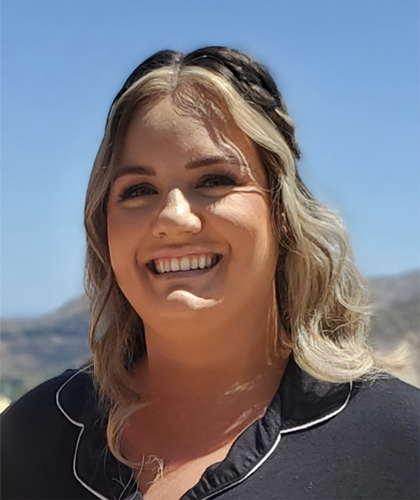
Amanda Huber – As a legal assistant, Amanda helps with the daily tasks of sending legal correspondence and documents, preparing court filings, and scheduling, among other tasks. Amanda joined the firm in 2022 and has helped clients in all phases of their divorce.
Prior to joining Lewis & Matthews, Amanda worked at an upscale country club in San Diego, where she was born and raised.
Outside of work you can find Amanda wine tasting, gardening, and spending time with her beloved cat, Waffles.
Counties We Serve
To ensure you receive a comprehensive estate plan and that your wishes will be respected, work with Lewis & Matthews P.C. Our Denver estate planning attorneys will help you every step of the way. Here are the counties we serve:
Greater Denver Metro Area
Address: 1325 S Colorado Blvd, Suite 503, Denver, CO 80222
(303) 329-3802
Summit County and Eagle County
Address: 114 Village Place, Suite 206, Dillon, CO 80435
Phone Number: (970) 468-0240